Do you actually need a Timeful alternative?
Honestly, you may not. Timeful is free, open source, and covers the scheduling essentials very well: calendar overlays for Google Calendar, Outlook, and Apple Calendar, email notifications and reminders, time zone handling, and a stack of power features. The case for Timespree as an alternative is not missing features; it is having fewer of them: a lighter, simpler grid for a quick one-off poll, with nothing extra to wade through.
That is an unusual way to open a comparison page, so let us be clear about why. Timeful (formerly Schej) started as a student project posted to Reddit as "I made a better when2meet" and became one of the most liked free schedulers on the internet. It is free, open source, actively maintained, and nice to use. Any comparison that pretends otherwise is marketing, not advice.
So this post does something narrower: it maps the real differences between two good free tools that share the same When2meet-style DNA, so you can pick based on your group instead of based on whose blog you landed on. We also wrote a Timeful vs When2meet comparison if you are coming from the original.
Timespree vs Timeful: feature comparison
Both tools are free availability polls: share a link, respondents paint a grid without creating an account, and a heatmap shows the group's overlap. The differences live at the edges. Checked July 2026.
| Feature | Timespree | Timeful |
|---|---|---|
| Price | Free | Free (open source; ads and donations) |
| Respondents need an account | No | No |
| Availability grid with heatmap | Yes | Yes |
| Mobile experience | Yes, mobile-first responsive grid | Yes, modern responsive UI |
| Google Calendar while responding | Yes, free import of busy times | Yes, shows your events beside the grid |
| Outlook calendar support | Yes, free | Yes, free |
| Apple Calendar support | Yes, free | Yes, free |
| Time zone display | Named event zone plus converted details | Local-time conversion |
| Email notifications | Yes, to the organizer | Yes, notifications and reminders |
| If-needed availability | Yes | Yes |
| CSV response export | Yes, for signed-in organizers | Yes |
| Availability groups | No | Yes |
| Plugin API | No | Yes |
| Participant limits | None | No practical limit for typical groups |
| Open source / self-hostable | No | Yes (AGPL v3, Docker Compose and NixOS docs) |
What Timeful does well
Timeful deserves its reputation, and these are the concrete reasons why.
- The calendar overlay is the killer feature, and it covers Google, Outlook, and Apple Calendar. While you mark availability, your actual events appear beside the grid. You stop guessing what "next Tuesday afternoon" looks like, and the poll's winning slot stops colliding with forgotten commitments.
- It kept the When2meet workflow and modernized everything around it. One link, no accounts for respondents, paint the grid, read the heatmap. The UI is clean, it behaves properly on phones, it schedules across time zones, and it emails you notifications and reminders.
- The power features go deep. You can mark times as "Available" or "If needed," view the overlap for a subset of respondents, duplicate polls, build availability groups that track real-time calendar availability, export results to CSV, hide responses from non-creators, and even build on a plugin API.
- It is open source (AGPL v3) and actively maintained. The code is public with roughly 1,700 GitHub stars (checked August 2026), and there are real self-hosting docs for Docker Compose and NixOS. The hosted site is free, accepts donations, and currently includes Google AdSense.
- The community genuinely likes it. It grew from a student's "I made a better when2meet" Reddit post into a widely recommended tool on scheduling threads (r/schej), which is about the strongest organic endorsement a free product can get.
If you are reading this to confirm Timeful is a capable choice: it is.
Where Timeful falls short (for some groups)
These are trade-offs relative to specific needs, not flaws in what Timeful set out to build.
- The feature depth cuts both ways. If-needed times, availability groups, CSV export, and a plugin API are genuinely useful for people who organize regularly. For a five-minute one-off poll among friends, they are more product than the job needs, and a respondent who just wants to paint a grid meets more UI along the way.
- The hosted product includes advertising. Timeful remains free and also accepts donations, but its current source includes Google AdSense. If that matters to your group, the AGPL code and self-hosting docs provide an alternative.
Notice what is not on this list: calendars (Google, Outlook, and Apple all work), notifications (it has them, with reminders), price (free), mobile (good), maintenance (active), openness (open source). The honest observation is that Timeful is a deep tool, and depth is only a win when you need it.
How Timespree compares, honestly
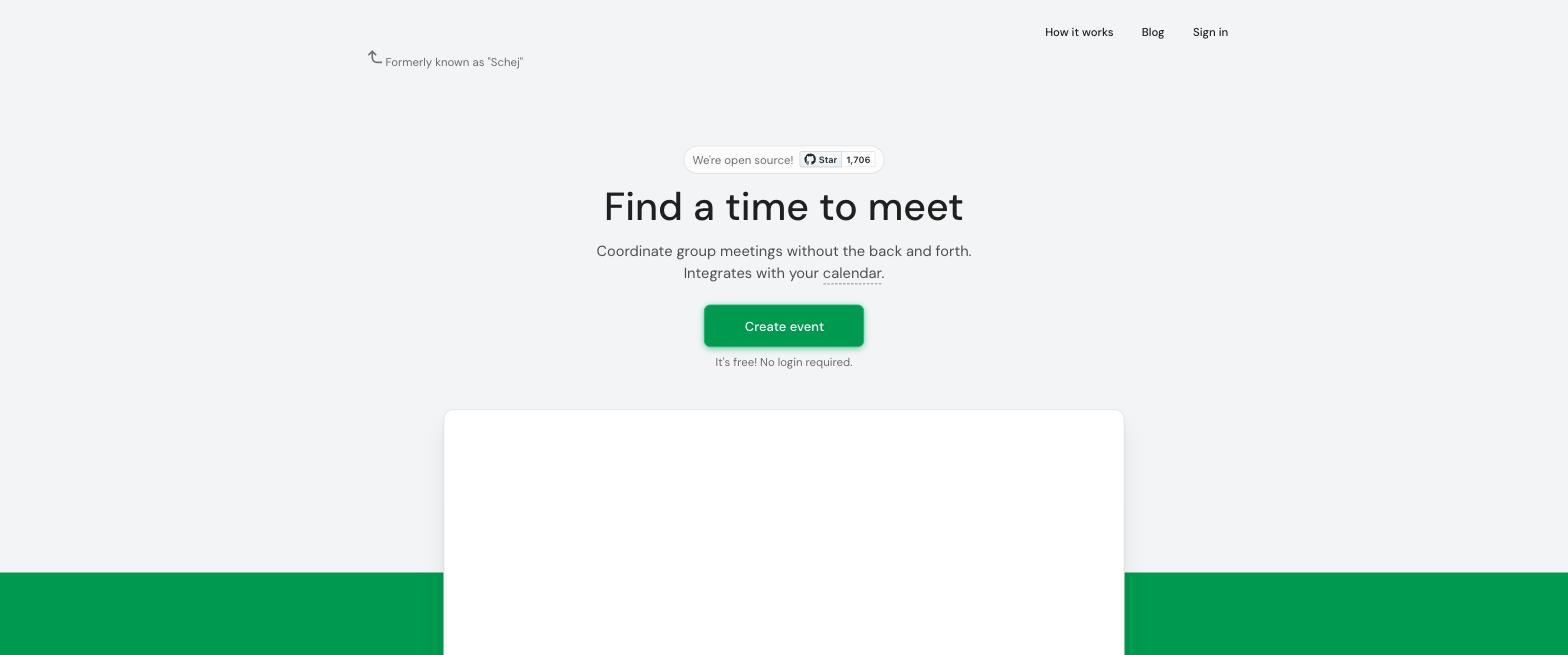
Timespree shares Timeful's premise: keep the When2meet workflow, fix what aged. The difference is where it drew the line on features.
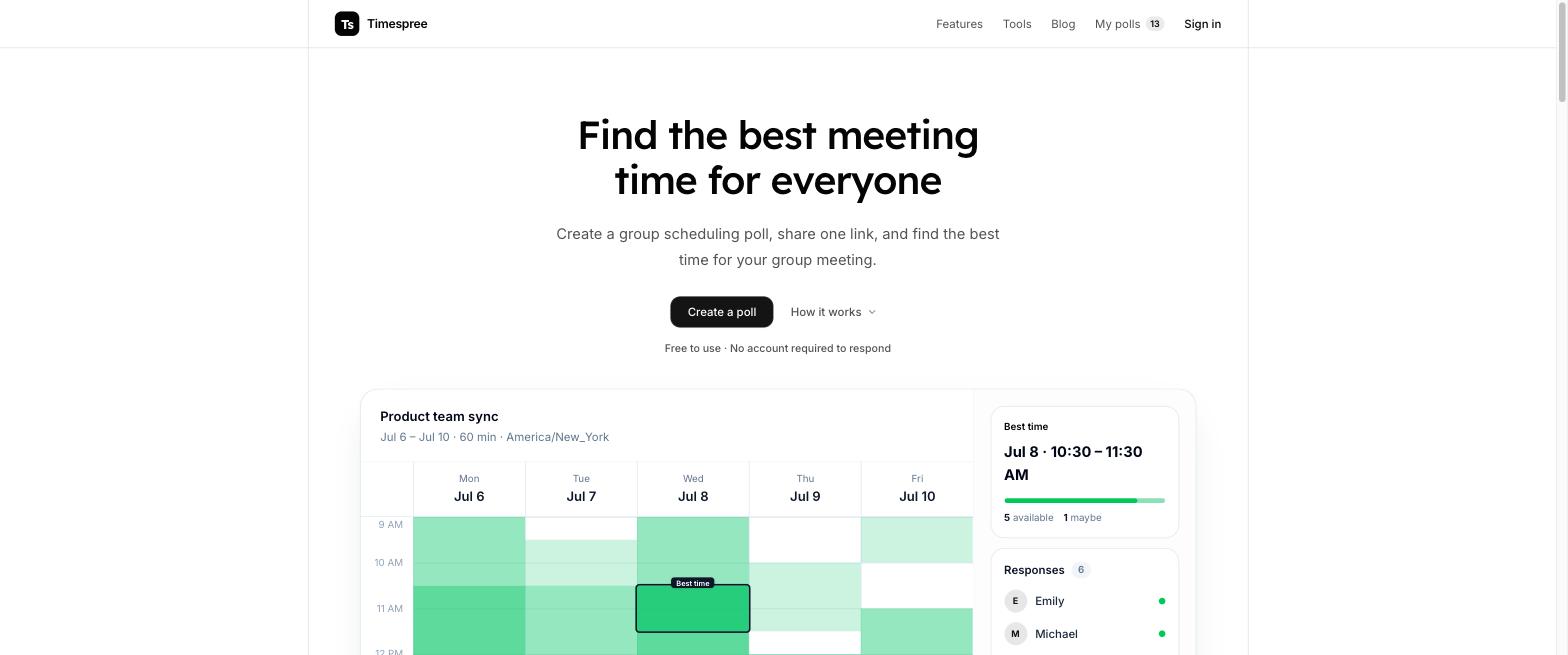
- It is deliberately focused. One event, one link, a grid, a heatmap, and an optional if-needed state. Respondents see only what they need to answer; signed-in organizers can export the results to CSV. If you run one poll a month for a friend group, that simplicity is the feature.
- A mobile-first grid. The grid was designed for thumbs first, so painting availability on a phone works without pinching or mis-taps.
- Calendar import and time zones are covered. Respondents can overlay busy times from Google Calendar, Outlook, or Apple Calendar (via CalDAV) while filling in the grid, free. The event grid names the organizer's zone and converted slot details use the participant's selected display zone. Timeful covers the same three calendar ecosystems and provides local-time conversion.
- Email notifications, reminders, no participant limits, and an optional organizer account to manage every event you have created. Timeful covers these too; this is parity, not an edge.
The honest trade-offs going the other way: Timespree is not open source, and it does not match Timeful's deepest tools: there are no availability groups, subset filtering, plugin API, or self-hosting. Timeful uses ads and also accepts donations. Timespree has no native mobile apps (the web grid is mobile-first) and no recurring poll automation. You can attach a video-call URL, but Timespree does not create one automatically. If open source matters to you on principle, Timeful and Rallly are the two names to know.
Which should you use?
Use Timeful if:
- You organize regularly and will actually use the power features: if-needed times, availability groups, duplicating polls, CSV export, the plugin API
- Open source and the option to self-host matter to you
- You want local-time conversion throughout the poll
Use Timespree if:
- You want a focused one-off poll: one link, a grid, a heatmap, and only a few organizer controls
- Most of your group will respond from a phone and you want a grid built for thumbs first
- You prefer a hosted product with zero setup and an optional account that lists your events
And honestly: for a group of six friends, either tool will find your meeting time quickly. Both cover Google, Outlook, and Apple calendars, both support cross-zone scheduling, and both send notifications. The real fork is depth versus focus. If you are still surveying the whole category, our best When2meet alternatives roundup puts Timeful, Timespree, LettuceMeet, Rallly, and Doodle side by side, and our group availability poll guide explains the heatmap model both tools share.