Rallly vs When2meet: the short answer
Use When2meet when a group has to find any workable time from messy schedules, and Rallly when you already have a few candidate times to vote on. Both are free and need no account to respond, so the real choice is the model.
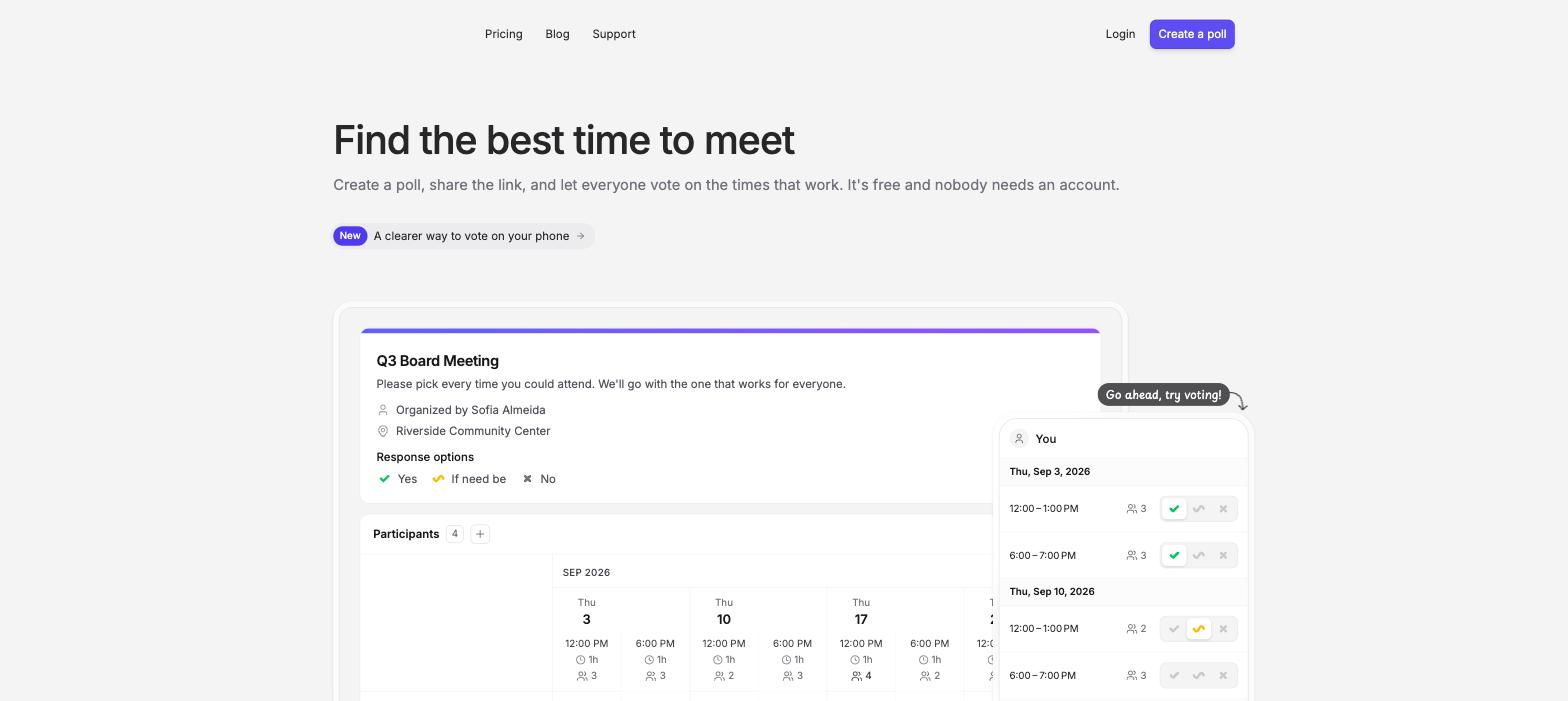
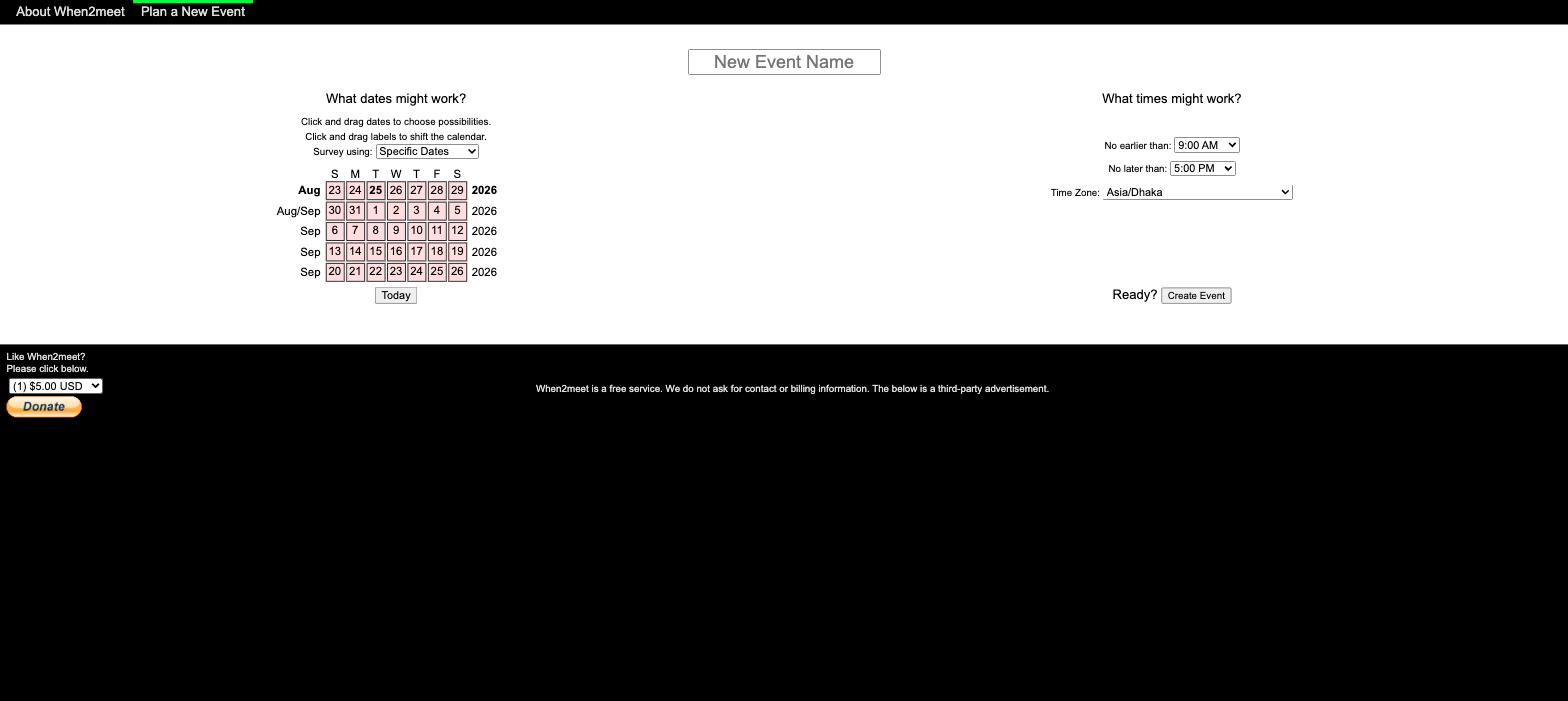
When2meet is an availability grid. Everyone paints all the hours they are free on a shared link, and the heatmap shows where the most people overlap. It shines when you genuinely do not know what will work, because it surfaces times you would never have thought to propose. Rallly is propose-and-vote: you list a handful of specific options, people mark yes, ifneedbe, or no, and the winner is obvious. It shines when the choice is between two or three known times.
Rallly is also open source and ad-free with a modern interface, which is why people leaving Doodle often land on it. When2meet is closed, ad-supported, and visually stuck in 2012, but it is the fastest to start and the tool half your group already knows.
The core difference: grid vs vote
The models decide most real cases before features come up.
When2meet collects availability first. The organizer sets a date range and time window, and every participant paints what works for them. Nobody has to guess good options in advance, so if a workable slot exists anywhere in the window, the grid finds it. The trade-off is that respondents do a bit more work up front, painting a week rather than ticking three boxes.
Rallly proposes options, then collects votes. You pick the candidate slots, and people react to them. It is faster for respondents, but it bets that one of your guesses hits everyone's free time. With a handful of busy people, that bet fails often, and every failed round costs a day while you propose new options.
Rule of thumb: the messier the schedules and the larger the group, the more the grid wins; the fewer and clearer the options, the more voting wins. Our When2meet vs Doodle comparison covers the same grid-versus-vote trade with Doodle in Rallly's place.
Features and pricing compared
| When2meet | Rallly | |
|---|---|---|
| Model | Availability grid | Propose-and-vote |
| Price | Free (ads) | Free; Pro USD 56/yr |
| Account to respond | None | None |
| Open source | No | Yes (AGPL-3.0), self-hostable |
| Ads | Yes | None |
| Free-tier catch | No calendar, dated mobile | Inactive polls auto-deleted |
| Interface | Dated, fast to set up | Modern and clean |
| Calendar sync | None | On paid tiers |
The catch in each
Both are genuinely free, and both have one real limitation.
Rallly's catch is auto-deletion, not ads. On the free Hobby plan, a poll is deleted once it goes inactive, which Rallly defines as all its date options being in the past with no votes or changes for over 30 days. For a one-off meeting that never matters, since you booked the time long ago, but if you want a permanent record, that is the USD 56-a-year Pro plan. Being open source, you can also self-host Rallly and keep everything. Our Rallly alternative guide goes deeper.
When2meet's catch is age. It is free and fast, but the site has barely changed since 2012: no calendar sync, so people mark availability from memory, no notifications, and a non-responsive layout that is fiddly on phones. Events also cannot be edited after creation. Our step-by-step When2meet guide and mobile guide cover the workarounds.
The modern grid option: Timespree
If you like When2meet's paint-availability model but want it to work on phones and with calendars, that is the gap Timespree fills, without switching to Rallly's vote model or losing the free, no-account flow.
Timespree keeps the grid: create an event, share one link, everyone paints their availability, no account to respond. On top of it, the grid is mobile-first, every participant sees times in their own zone automatically, they can overlay Google, Outlook, or Apple busy times for free while responding, and the organizer gets an email as answers arrive. There are no ads and no inactivity timer on your polls.
So the full map is three tools for two models: When2meet or Timespree when you want everyone's full availability on a grid, and Rallly when you would rather vote on a few set options. Our group availability poll roundup compares six free grids, and the best When2meet alternatives guide ranks seven tools across both models.
Which should you choose?
Match the tool to the job:
- Messy schedules, you do not know what works: a grid. When2meet if the group is on laptops and knows it, Timespree if phones or time zones are involved.
- You have a few good candidate times to vote on: Rallly. It is free, ad-free, and the cleanest of the vote tools, with the bonus of being open source.
- You want to own your data or self-host: Rallly, run on your own server.
Both are free and need no login to respond, so if you are unsure, the deciding question is simple: are you searching for a time, or choosing between times? Searching favors the grid; choosing favors the vote.