The best free Xoyondo alternative for meetings
If you use Xoyondo to schedule meetings and want a cleaner tool for that specific job, the best free alternative is an availability grid, and Timespree is the modern one. Xoyondo is a versatile poll suite, and that breadth is its strength, but it means meeting scheduling is one feature among several rather than the whole point.
The core difference is how people answer. Xoyondo asks you to propose a set of times and has participants vote on which they can make. Timespree asks everyone to paint all the hours they are free on a shared grid, then shows the overlap. The grid finds the best time on its own, including one you might never have thought to propose, which is the main reason to switch for meetings.
Timespree vs Xoyondo: how they differ
Both are free and need no account to respond, but they are built around different models. Here is the comparison for the meeting-scheduling job, checked August 2026.
| Timespree | Xoyondo | |
|---|---|---|
| Model | Availability grid (paint your free time) | Propose-and-vote poll |
| Finds unproposed times | Yes | No |
| Ads | None | Light ads on free |
| Mobile-first | Yes | Basic |
| Automatic time zones | Yes | Limited |
| Calendar overlay while responding | Yes | No |
| Opinion polls + sign-up sheets | No | Yes |
What Xoyondo does well
Xoyondo earns its users, and it would be dishonest to pretend otherwise. It is genuinely free, with unlimited polls and participants, and neither the organizer nor the voters need an account. Its real edge is versatility: beyond date and time polls, it runs opinion polls and sign-up sheets in the same place, which is handy if your group needs more than a meeting time. It also supports flexible options like broader time blocks and free-text columns, and it works in multiple languages. If you regularly need those poll types, Xoyondo is a reasonable home for all of them.
Where Xoyondo falls short for meeting scheduling
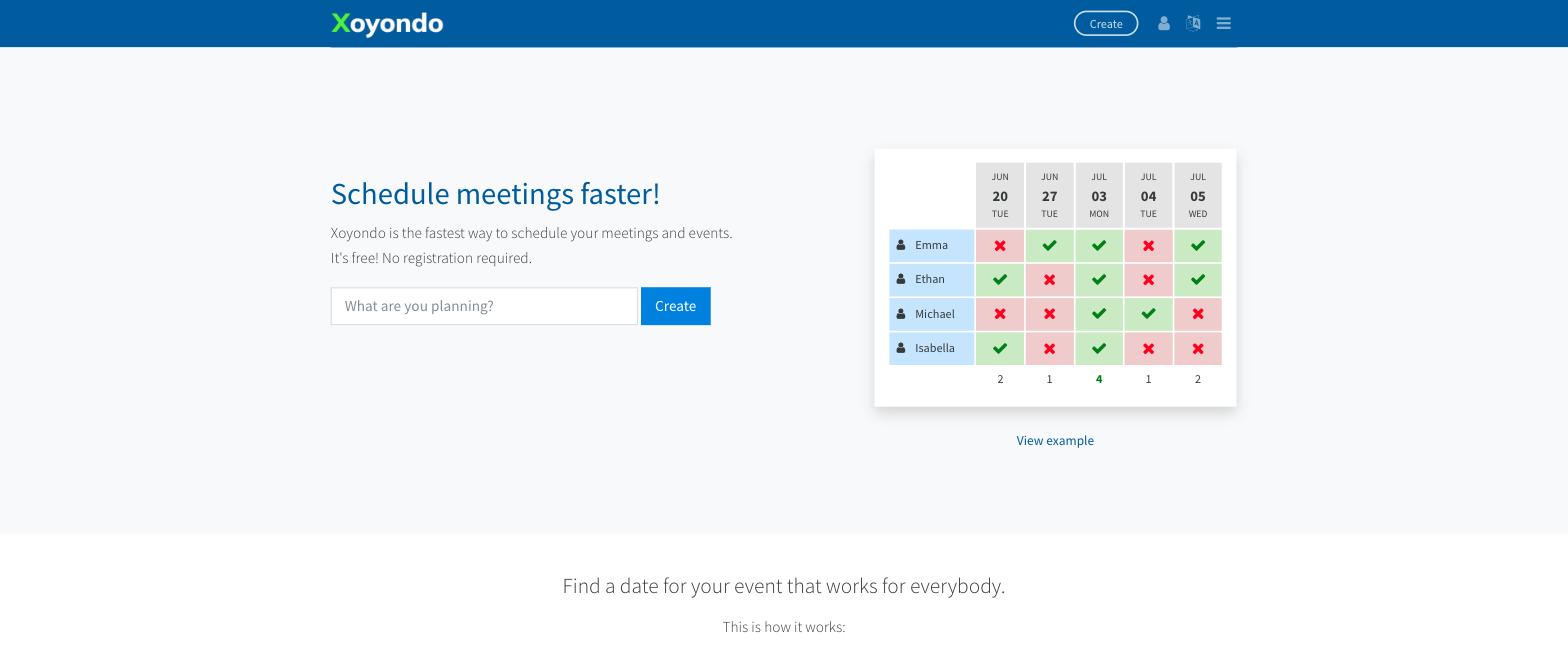
For finding a meeting time specifically, Xoyondo has two limits. First, the model: propose-and-vote means you guess the candidate times up front, so the poll can only confirm one of the options you listed, never surface a better slot you did not think of. On a busy group calendar, that often means settling. Second, the ads: Xoyondo's free plan shows light ads, which is milder than some tools but still visible to everyone who opens your poll. For a clean, client-facing page, an ad-free option reads better.
How Timespree compares
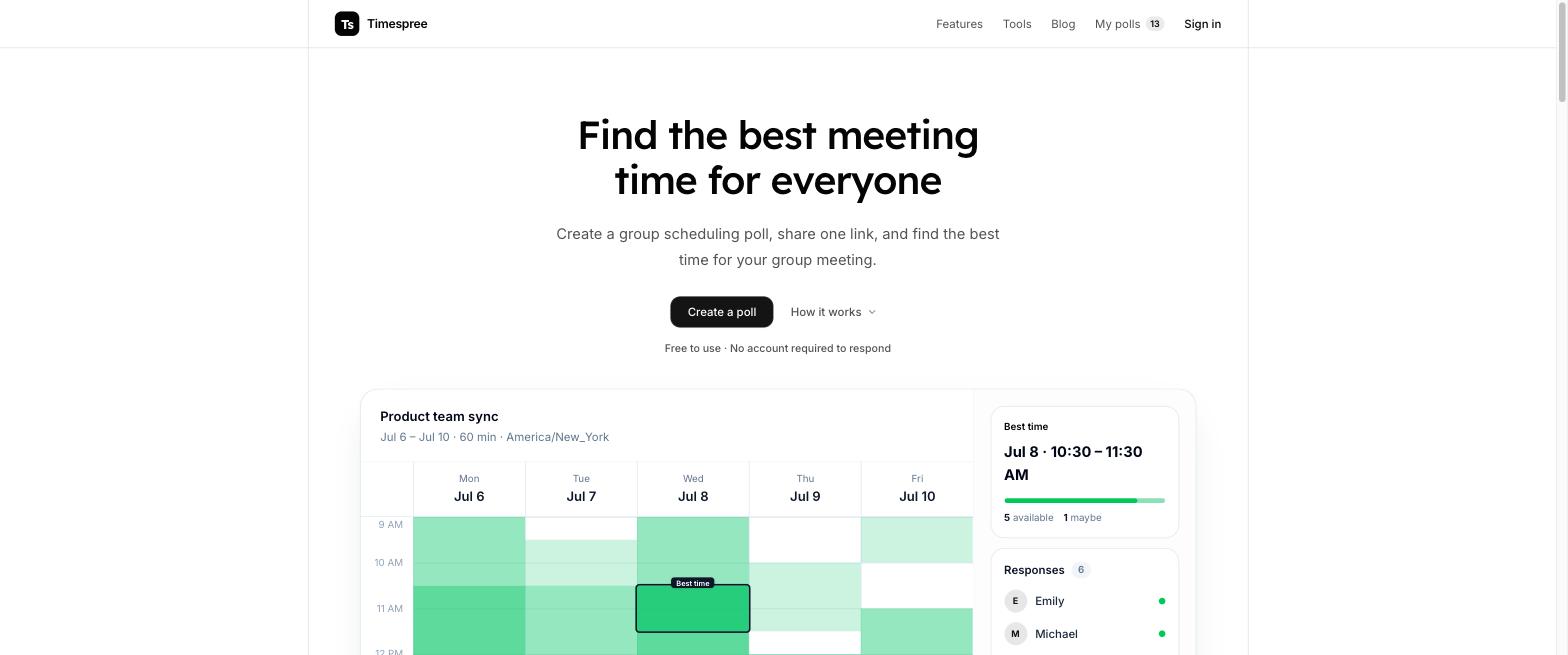
Timespree is built for the meeting-time job and nothing else, which is why it does that job more cleanly. Everyone paints all the hours they are free on a mobile-first grid, and the darkest overlap is your meeting, including times nobody proposed. It converts each person's grid to their own local time automatically, so a group across time zones never answers for the wrong hour. It overlays your Google, Outlook, or Apple calendar while you respond, so you shade around what you already have. There are no ads, no participant limit, and no account needed to respond. For a recurring group, a scheduling poll for team meetings settles the time in one link.
Other free tools like Xoyondo
If you want to weigh the whole field, a few other free tools do the group-scheduling job. When2meet is the classic availability grid, though it shows ads and is dated on mobile. LettuceMeet is a cleaner, ad-free grid. Rallly is an open-source date poll, closer to Xoyondo's vote-on-options model but ad-free and self-hostable. Our best Doodle alternatives and group availability poll roundups compare them side by side, so you can match the tool to how your group likes to answer.